Tax Deductions & Exemptions Under Income Tax Act 2025: Complete Guide
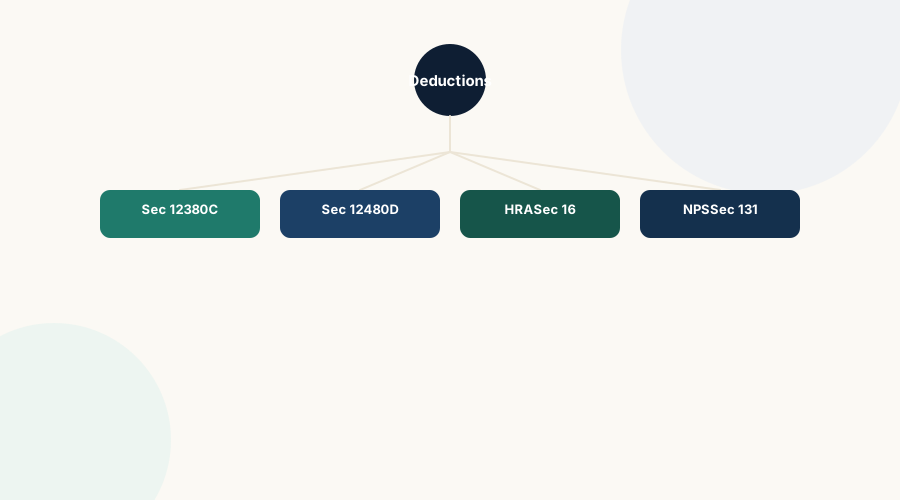
India's new Income Tax Act, 2025 has renumbered but not eliminated the major tax-saving deductions. This guide maps every key deduction to its new section number, explains the limits and eligibility rules, and tells you which deductions are available only under the old tax regime.
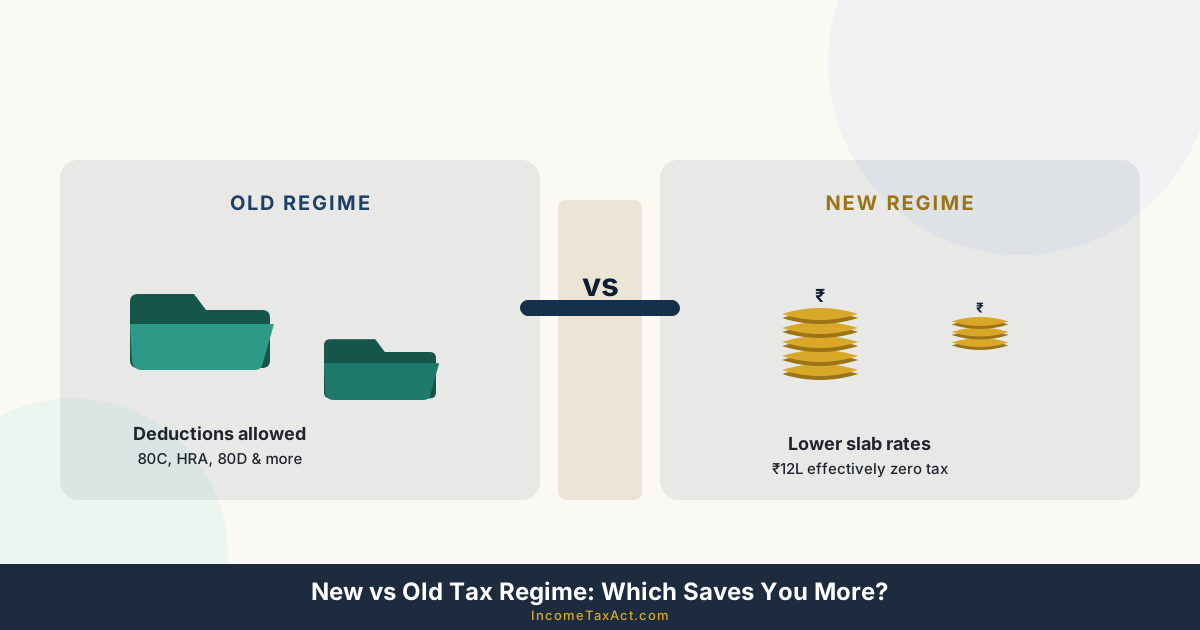
Most of the deductions listed in this guide — Section 123 (80C), Section 124 (80D), HRA, home loan interest — are available only under the old tax regime. Under the new tax regime, most deductions are not available, except the standard deduction of ₹75,000 for salaried individuals and the employer NPS contribution deduction.
Standard deduction (both regimes)
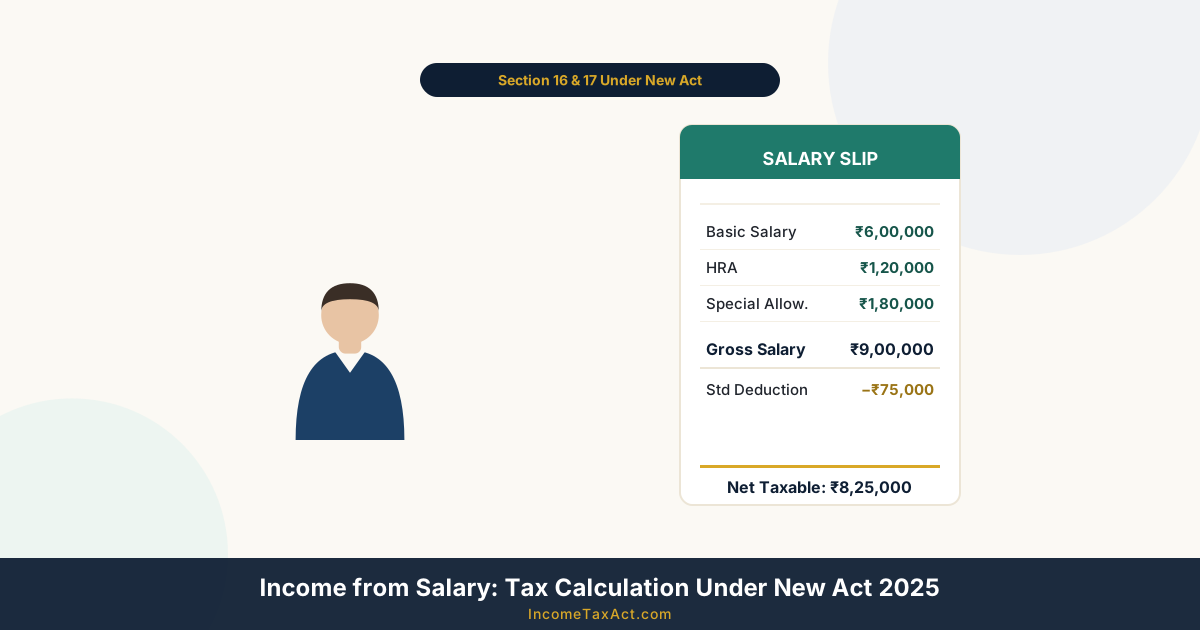
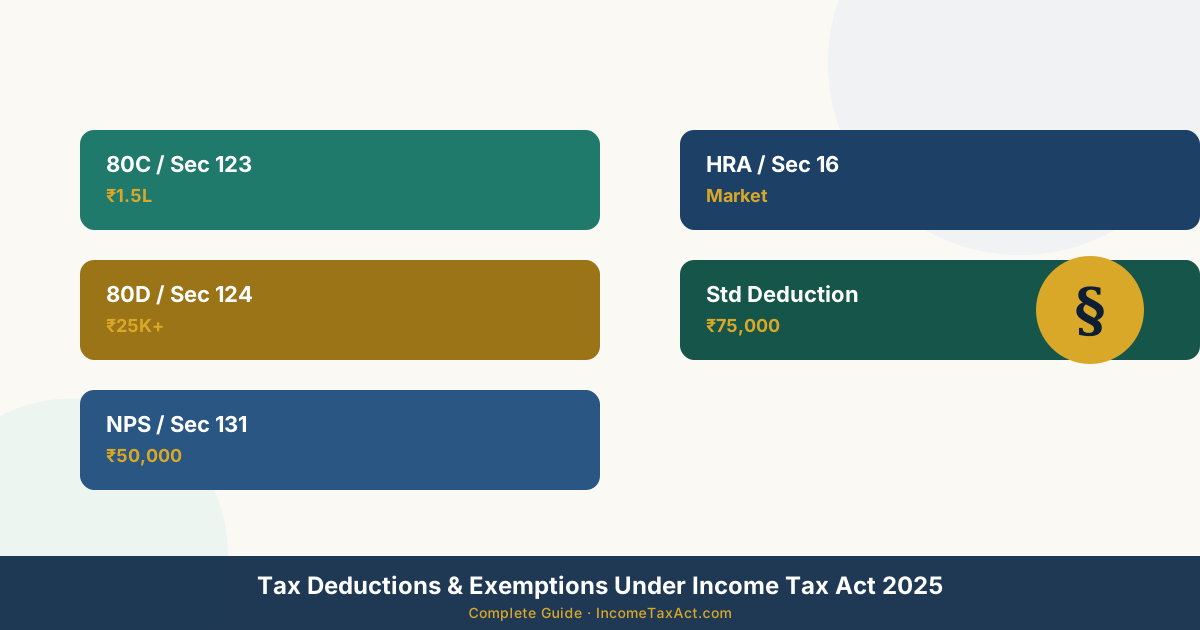
The standard deduction of ₹75,000 is available to all salaried employees and pensioners under both the new and old tax regimes. No documentation is required — it is a flat deduction from gross salary income available under Section 16 of both the 1961 and 2025 Acts.
Section 123 (old 80C) — ₹1.5 lakh cap
Section 123 of the Income Tax Act, 2025 (previously Section 80C of the 1961 Act) is the most widely used deduction. Eligible investments and expenses include:
| Investment / Payment | Maximum Deduction |
|---|---|
| ELSS Mutual Funds (Equity Linked Savings Schemes) | Combined ₹1,50,000 per year |
| Public Provident Fund (PPF) contribution | |
| Employee Provident Fund (EPF) contribution | |
| 5-year Tax Saving Fixed Deposit (bank / post office) | |
| Life Insurance Premium (LIC or other insurer) | |
| National Savings Certificate (NSC) | |
| Sukanya Samriddhi Yojana (SSY) | |
| Senior Citizen Savings Scheme (SCSS) | |
| Home loan principal repayment | |
| Children's tuition fees (up to 2 children) | |
| Stamp duty & registration charges on house | |
| Unit Linked Insurance Plan (ULIP) premium |
Section 124 (old 80D) — Medical insurance
| Who is covered | Maximum deduction |
|---|---|
| Self, spouse, and dependent children (below 60) | ₹25,000 |
| Self, spouse, and dependent children (self or spouse 60+) | ₹50,000 |
| Parents (below 60) | Additional ₹25,000 |
| Parents (60+) | Additional ₹50,000 |
| Maximum total (all senior citizens) | ₹1,00,000 |
| Preventive health check-up (within overall limit) | ₹5,000 |
HRA exemption (Section 16 / Schedule II)
House Rent Allowance exemption is calculated as the least of:
- Actual HRA received from employer
- 50% of basic salary (metro cities: Mumbai, Delhi, Chennai, Kolkata) or 40% (non-metro)
- Actual rent paid minus 10% of basic salary
Example: Basic salary ₹6L/year, HRA received ₹2.4L, rent paid ₹2L in Delhi:
(a) ₹2,40,000 (b) 50% × ₹6L = ₹3,00,000 (c) ₹2,00,000 – ₹60,000 = ₹1,40,000
HRA exempt = ₹1,40,000 (least of three)
If annual rent exceeds ₹1 lakh, the landlord's PAN is mandatory. Provide it in your ITR or to your employer in Form 12BB.
Home loan deductions (old regime only)
| Deduction | Section (New / Old) | Limit |
|---|---|---|
| Interest on home loan (self-occupied) | Sec 74 / old 24(b) | ₹2,00,000 per year |
| Interest on home loan (let out property) | Sec 74 / old 24(b) | No limit (loss can be set off up to ₹2L) |
| Principal repayment | Sec 123 / old 80C | Within ₹1.5L overall 80C cap |
| Additional first home loan interest | Sec 82 / old 80EEA | ₹1,50,000 (if loan sanctioned before 1 Apr 2022) |
NPS deductions (Section 131 / old 80CCD)
National Pension System contributions offer two separate deductions:
- Section 131(1)(b) — employee NPS contribution, within the ₹1.5L Section 123 cap
- Section 131(1B) — additional ₹50,000 over and above the Section 123 limit. This is one of the very few deductions available under both the new and old regimes
- Employer NPS contribution — deductible up to 10% of salary under Section 131(2) — available under new regime too
Other important deductions
| Deduction | New Sec / Old Sec | Limit | Regime |
|---|---|---|---|
| Interest on education loan | Sec 90 / old 80E | No limit — for 8 years | Old only |
| Disability (self) | Sec 128 / old 80U | ₹75,000 (₹1.25L severe) | Old only |
| Donations (80G charities) | Sec 122 / old 80G | 50%–100% of donation | Old only |
| Interest on savings account | Sec 126 / old 80TTA | ₹10,000 (₹50,000 for seniors) | Old only |
| Employer NPS (Sec 80CCD(2)) | Sec 131(2) | 10% of salary | Both regimes |
| Additional NPS (Sec 80CCD(1B)) | Sec 131(1B) | ₹50,000 | Both regimes |
| Standard deduction (salaried) | Sec 16 | ₹75,000 | Both regimes |
Maximise your tax savings with these tools
ELSS / Mutual Fund Investment Tracker
Notebook designed to track your SIP investments, ELSS redemptions, and capital gain statements across financial years.
View on Amazon →Tax Saving Investment Guide Book
Comprehensive guide to Section 80C, 80D, NPS, PPF, ELSS, and every tax-saving instrument available to Indian investors.
View on Amazon →Filing Cabinet Home Office
Organised filing cabinet to store all your tax-related documents — Form 16, investment certificates, PPF passbook — year by year.
View on Amazon →ℹ Disclosure: IncomeTaxAct.com is a participant in the Amazon Services LLC Associates Program. We earn a commission at no extra cost to you when you purchase through our links. Read our full affiliate disclosure.
No. Section 80C deductions (now Section 123 of the Income Tax Act, 2025) are not available under the new tax regime. The new regime offers lower slab rates in exchange for giving up most deductions. The only deductions available under the new regime are the ₹75,000 standard deduction, employer NPS contribution (Sec 131(2)), and additional employee NPS ₹50,000 (Sec 131(1B)).
The maximum deduction under Section 123 of the Income Tax Act, 2025 (old Section 80C) remains ₹1,50,000 per financial year. This cap covers the combined total of all eligible investments and expenses — ELSS, PPF, LIC premium, EPF, NSC, home loan principal, etc.
Yes. You can claim up to ₹1,50,000 under Section 123 (which includes employee NPS contribution under Section 131(1)(b)) and an additional ₹50,000 under Section 131(1B) for NPS — bringing the total to ₹2,00,000. The additional ₹50,000 NPS deduction is over and above the Section 123 cap.
Related Guides