New vs Old Tax Regime: Which Saves You More? (FY 2025-26)
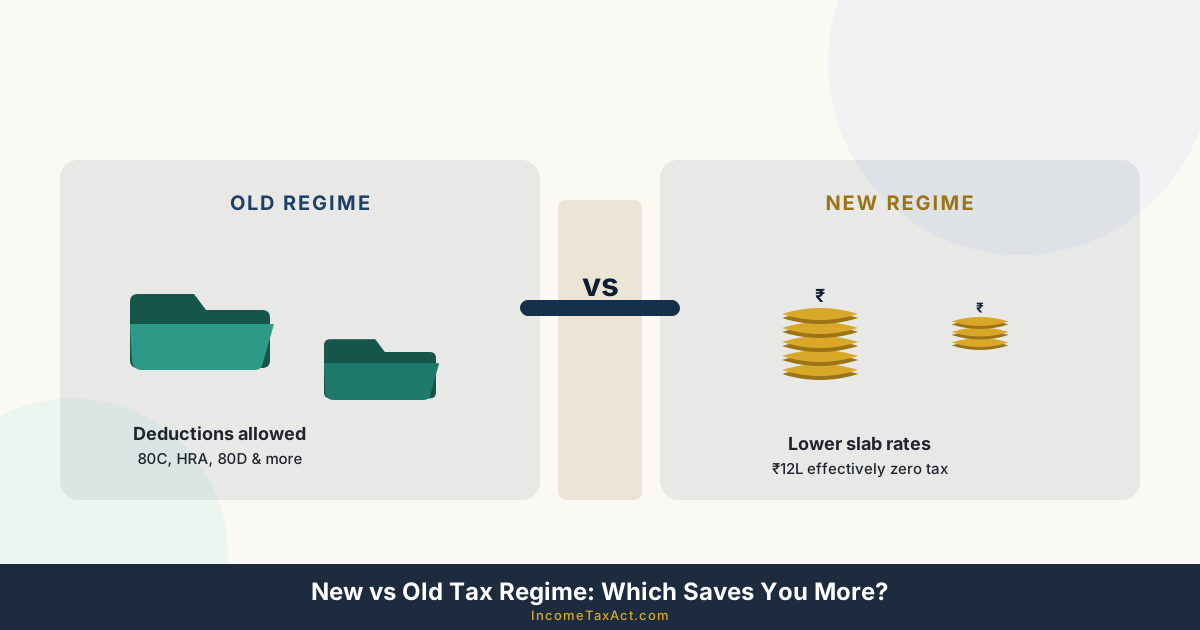
The new tax regime is now the default in India. But for millions of taxpayers with significant deductions — HRA, Section 80C investments, home loans — the old regime can still result in lower tax. This guide gives you a definitive, worked-example comparison at every income level so you can make the right choice.
Two regimes, one choice to make
Since Budget 2020, Indian taxpayers can choose between two income tax regimes when filing their return. From FY 2023-24 onwards, the new tax regime became the default — meaning if you do nothing, the new regime applies. You must explicitly opt for the old regime in your ITR if you want to use it.
Under the Income Tax Act, 2025 (effective April 1, 2026), both regimes continue. The new regime is still the default. The key question remains: which one results in lower tax for you?
Slab rates side by side
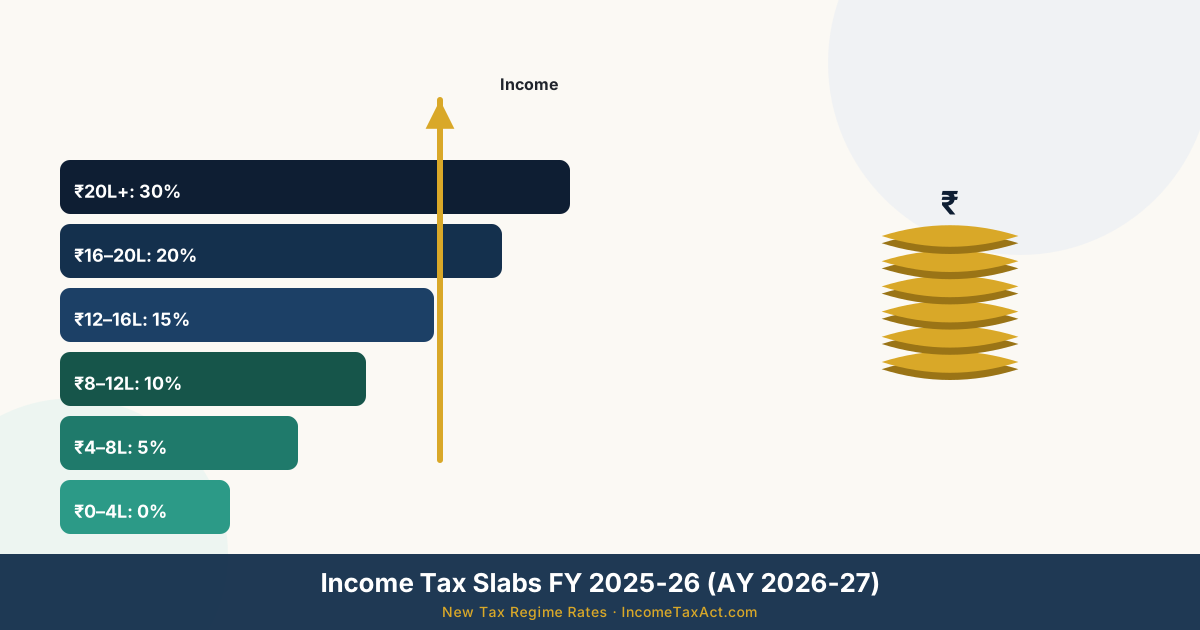
| Income Range | New Regime Rate | Old Regime Rate |
|---|---|---|
| Up to ₹2.5 lakh | Nil | Nil |
| ₹2.5L to ₹3L | Nil | 5% (above ₹2.5L for under 60) |
| ₹3L to ₹4L | Nil | 5% |
| ₹4L to ₹5L | 5% | 5% |
| ₹5L to ₹6L | 5% | 20% |
| ₹6L to ₹7.5L | 10% | 20% |
| ₹7.5L to ₹9L | 10% | 20% |
| ₹9L to ₹10L | 15% | 20% |
| ₹10L to ₹12L | 15% | 30% |
| ₹12L to ₹12.75L | 20% | 30% |
| Above ₹12.75L / ₹15L | 20–30% | 30% |
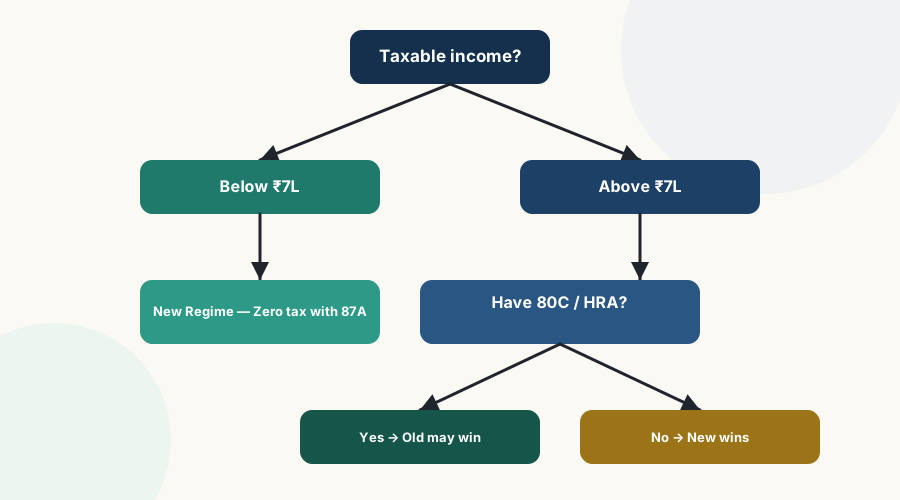
Under the new regime, income up to ₹12 lakh attracts zero tax after the full Section 87A rebate of ₹60,000. For salaried individuals, the ₹75,000 standard deduction makes this ₹12.75 lakh. The old regime offers a rebate only up to ₹5 lakh (₹12,500 rebate).
Worked examples at key income levels
₹10 lakh annual salary
| Item | Old Regime | New Regime |
|---|---|---|
| Gross Salary | ₹10,00,000 | ₹10,00,000 |
| Standard Deduction | ₹50,000 | ₹75,000 |
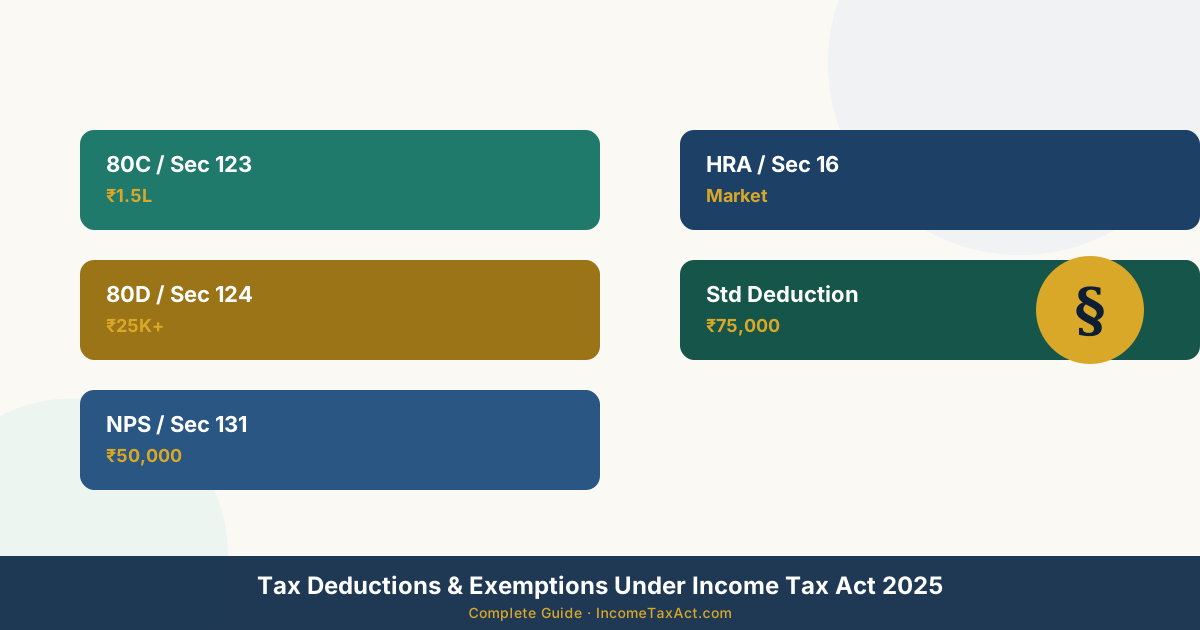
| Section 80C (Sec 123) | ₹1,50,000 | Not allowed |
| Section 80D (Sec 124) | ₹25,000 | Not allowed |
| HRA exemption | ₹60,000 | Not allowed |
| Taxable Income | ₹7,15,000 | ₹9,25,000 |
| Tax payable (before cess) | ₹52,500 | ₹57,500 |
| 4% health & education cess | ₹2,100 | ₹2,300 |
| Total Tax | ₹54,600 | ₹59,800 |
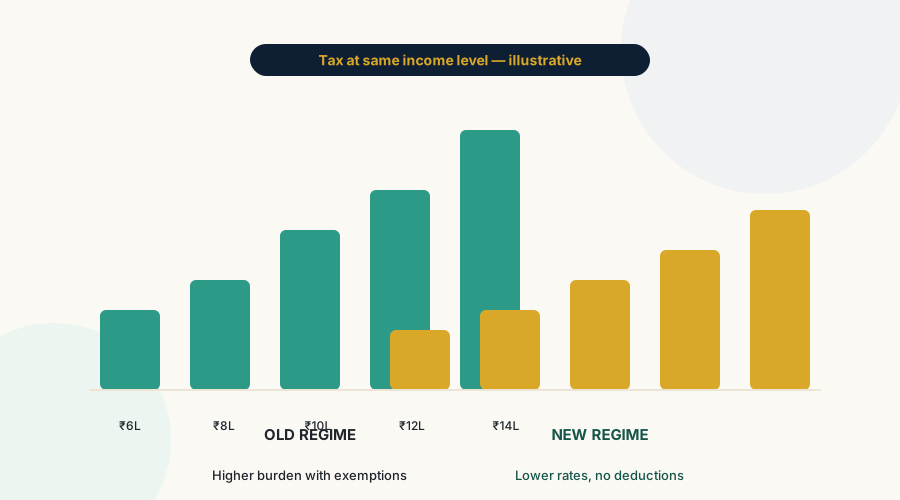
Verdict at ₹10L: Old regime saves ₹5,200. (Assumes ₹60K HRA, max 80C, basic 80D.)
₹15 lakh annual salary
| Item | Old Regime | New Regime |
|---|---|---|
| Gross Salary | ₹15,00,000 | ₹15,00,000 |
| Standard Deduction | ₹50,000 | ₹75,000 |
| Section 80C | ₹1,50,000 | Not allowed |
| Section 80D | ₹25,000 | Not allowed |
| HRA | ₹1,20,000 | Not allowed |
| Taxable Income | ₹11,55,000 | ₹14,25,000 |
| Tax (before cess) | ₹1,57,500 | ₹1,56,250 |
| Total Tax (with cess) | ₹1,63,800 | ₹1,62,500 |
Verdict at ₹15L: New regime wins — but barely (saves ₹1,300). The break-even is around ₹14.5L for this deduction profile.
The break-even income: when new regime wins
The break-even depends on your total deductions. The higher your deductions, the more the old regime benefits you. As a rough guide:
- Total deductions < ₹3.75 lakh: New regime almost always wins
- Total deductions ₹3.75L – ₹5.5L: Income-dependent — calculate both
- Total deductions > ₹5.5 lakh: Old regime likely wins at moderate incomes
Who should choose which regime?
| Profile | Recommended Regime | Reason |
|---|---|---|
| Income below ₹12L (salaried) | New Regime | Zero tax after 87A rebate and standard deduction |
| First-time earner, no investments yet | New Regime | Lower rates, no complexity |
| Significant home loan (interest > ₹2L) | Old Regime often | Section 24b interest deduction not in new regime |
| HRA-paying metro resident | Old Regime often | HRA exemption can be substantial in metros |
| High-earner above ₹50L | New Regime often | 30% flat rate applies in both — new regime simpler |
| Freelancer / self-employed | New Regime often | Presumptive income simplified; deductions limited anyway |
Don't guess — use our free income tax calculator to compute your exact liability under both regimes and see the difference in seconds.
Tax planning tools to get organised
Tax Organizer Accordion File
12-pocket accordion file perfect for storing Form 16, salary slips, investment proofs, and rent receipts for your ITR filing.
View on Amazon →Income Tax Calculator Device
Dedicated financial calculator for quick tax, loan EMI, and investment calculations without needing a phone.
View on Amazon →Personal Finance Planner 2026
Annual planner with dedicated sections for tracking income, tax deductions, investments, and advance tax payments.
View on Amazon →ℹ Disclosure: IncomeTaxAct.com is a participant in the Amazon Services LLC Associates Program. We earn a commission at no extra cost to you when you purchase through our links. Read our full affiliate disclosure.
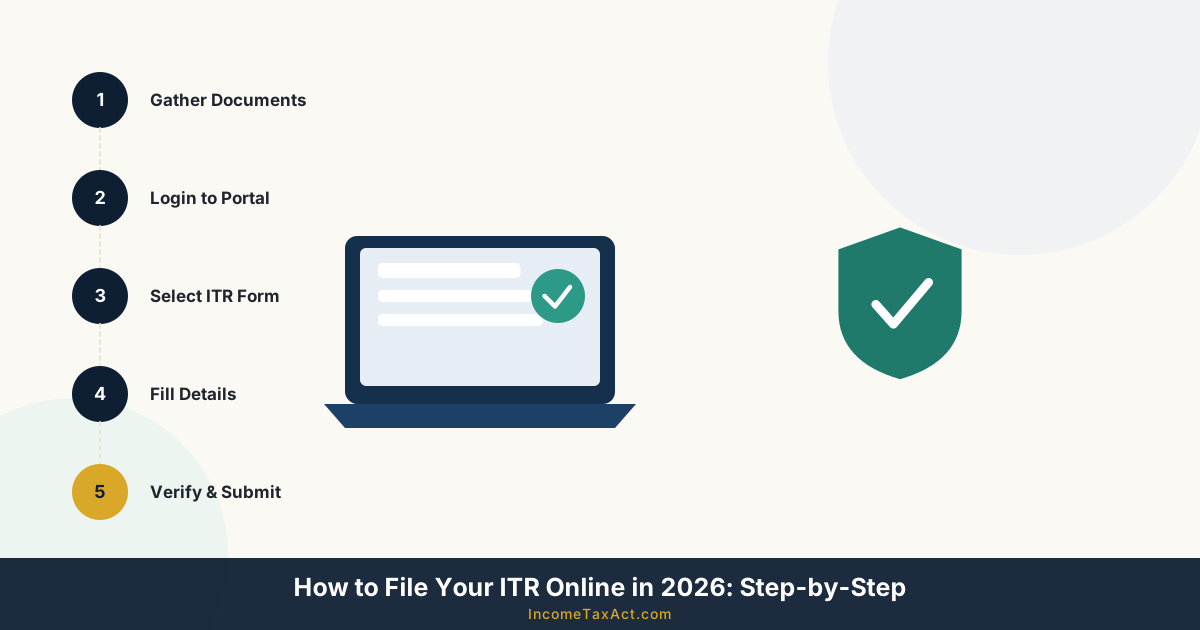
Salaried employees can switch between the old and new regime every year when filing their ITR. However, if you have business income, you can only switch once — from old to new — and cannot switch back. You must inform your employer of your regime choice at the start of the financial year to determine correct TDS deduction.
Yes. Both the old and new tax regimes continue under the Income Tax Act, 2025. The new regime remains the default, but taxpayers can explicitly opt for the old regime when filing their ITR. The old regime will likely be phased out gradually, but there is no official timeline announced yet.
For a taxpayer at ₹15 lakh gross income, the break-even deductions are approximately ₹3.75 lakh. If your total eligible deductions (80C, 80D, HRA, home loan interest) exceed this amount, the old regime generally results in lower tax. Below this, the new regime usually wins due to lower slab rates.
Related Guides