Income from Salary: How It's Taxed Under Income Tax Act 2025
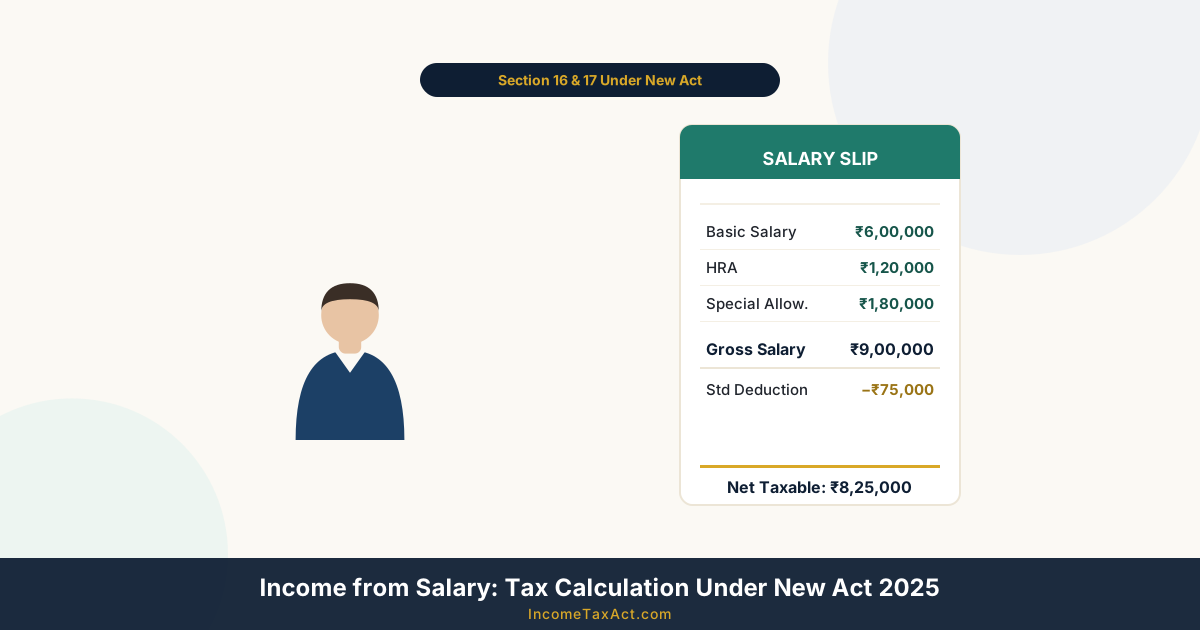
Salary income is the most common head of income for Indian taxpayers. The Income Tax Act, 2025 retains the same structure as the 1961 Act for taxing salary — but with updated section numbers and clearer language. This guide covers HRA calculation, standard deduction, perquisites, and worked examples.
What constitutes salary income?
Under Section 17 of both the 1961 and 2025 Acts, "salary" includes a wide range of payments from an employer:
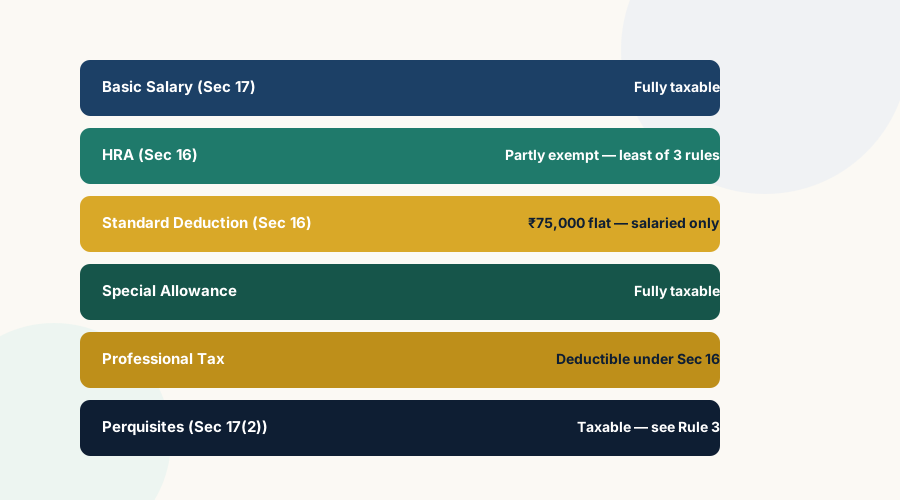
| Component | Tax Treatment |
|---|---|
| Basic Salary | Fully taxable |
| Dearness Allowance (DA) | Fully taxable |
| House Rent Allowance (HRA) | Partly exempt under Sec 16 (least of 3 rules) |
| Special Allowance | Fully taxable |
| Leave Travel Allowance (LTA) | Exempt for 2 journeys in a 4-year block (within India) |
| Overtime pay | Fully taxable |
| Bonus / commission | Fully taxable |
| Perquisites (Sec 17(2)) | Taxable at prescribed rates (employer value rule) |
| Leave encashment (on resignation) | Fully taxable; exempt on retirement (up to ₹25L) |
| Gratuity | Exempt up to ₹20L for government; ₹20L private sector |
| Professional Tax | Deductible under Section 16 |
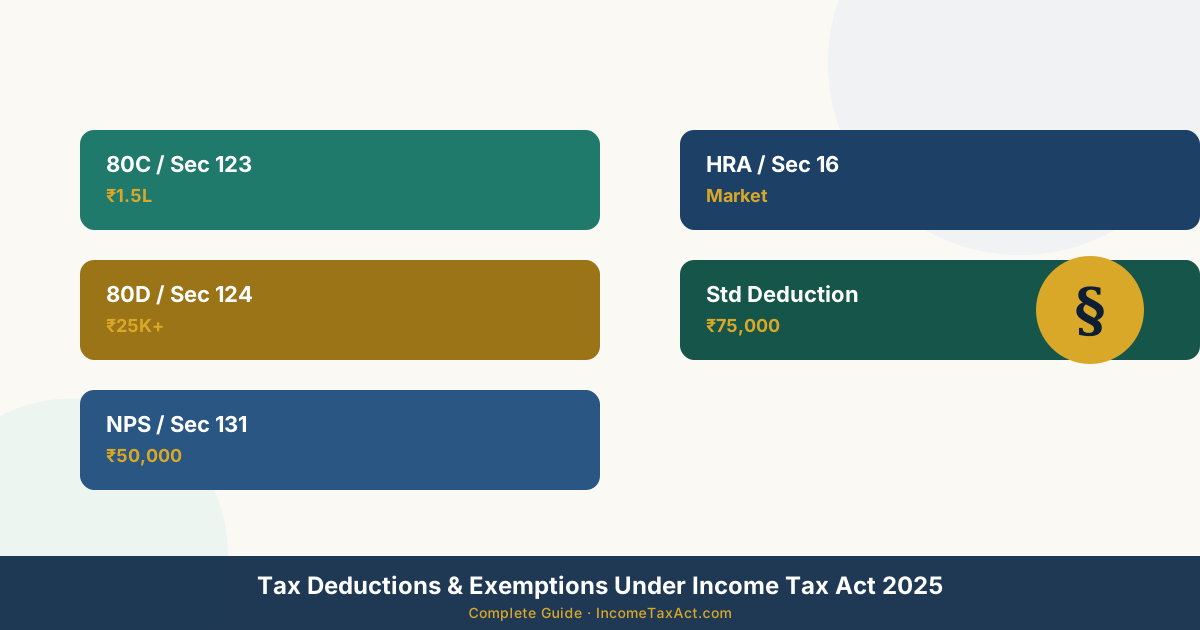
| Standard Deduction | ₹75,000 flat (both regimes) |
HRA exemption calculation
The HRA exemption under Section 16 (retained in both Acts) is the least of three amounts:
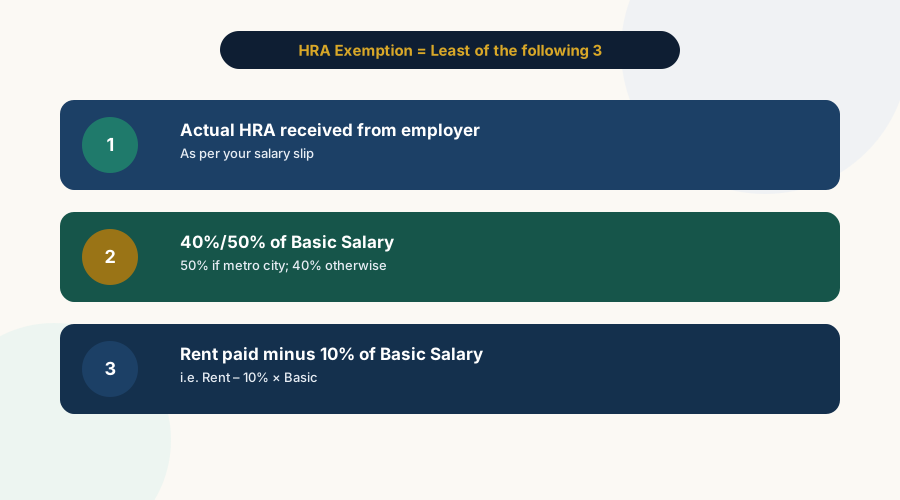
| Condition | Amount |
|---|---|
| 1. Actual HRA received from employer | As per your salary slip |
| 2. 50% of Basic+DA (metro) or 40% (non-metro) | Metro cities: Mumbai, Delhi, Chennai, Kolkata |
| 3. Actual rent paid minus 10% of Basic+DA | Rent – 10% × (Basic + DA) |
Worked Example:
Monthly basic: ₹50,000 | HRA received: ₹20,000/mo | Rent paid: ₹18,000/mo | City: Bangalore (non-metro)
| Monthly | Annual | |
|---|---|---|
| Actual HRA received | ₹20,000 | ₹2,40,000 |
| 40% of basic (non-metro) | ₹20,000 | ₹2,40,000 |
| Rent – 10% of basic: ₹18K – ₹5K | ₹13,000 | ₹1,56,000 |
| HRA Exempt (least) | ₹13,000 | ₹1,56,000 |
| HRA taxable (₹2.4L – ₹1.56L) | ₹84,000 |
Perquisites: what counts and how they are taxed
Perquisites (perks) under Section 17(2) are non-cash benefits provided by the employer and are taxable based on prescribed valuation rules. Key perquisites include:
| Perquisite | Valuation / Tax Treatment |
|---|---|
| Rent-free accommodation (employer-owned) | 15% of salary (metro) / 10% (non-metro) |
| Concessional accommodation | 15%/10% of salary minus rent paid by employee |
| Car (for personal use, employer-owned) | ₹1,800–₹2,400/month (engine size dependent) |
| Free meals at office | Exempt up to ₹50 per meal (up to 2 per day) |
| Gift vouchers / credit card (employer provided) | Exempt up to ₹5,000/year; taxable above |
| Interest-free loans (employer) | Taxable on interest difference vs SBI rate |
| ESOPs (on exercise) | Taxable as perquisite; difference between FMV and exercise price |
| Health insurance premium paid by employer | Exempt (not taxable as perquisite) |
Salary tax under new vs old regime: worked example
Deepa earns ₹12,00,000/year (basic ₹7.2L, HRA ₹2.4L, Special Allowance ₹2.4L). She pays rent of ₹18,000/month in Pune. She has PPF investments of ₹1.5L and pays ₹25,000 health insurance premium.
| Item | Old Regime | New Regime |
|---|---|---|
| Gross Salary | ₹12,00,000 | ₹12,00,000 |
| HRA Exemption | –₹1,02,000 | Not applicable |
| Standard Deduction (Sec 16) | –₹50,000 | –₹75,000 |
| Section 123 (80C) — PPF | –₹1,50,000 | Not applicable |
| Section 124 (80D) — health ins. | –₹25,000 | Not applicable |
| Taxable Income | ₹8,73,000 | ₹11,25,000 |
| Tax (before cess) | ₹74,600 | ₹52,500 |
| Section 87A rebate | Nil (income > ₹5L) | Nil (income > ₹12L) |
| 4% cess | ₹2,984 | ₹2,100 |
| Total Tax Payable | ₹77,584 | ₹54,600 |
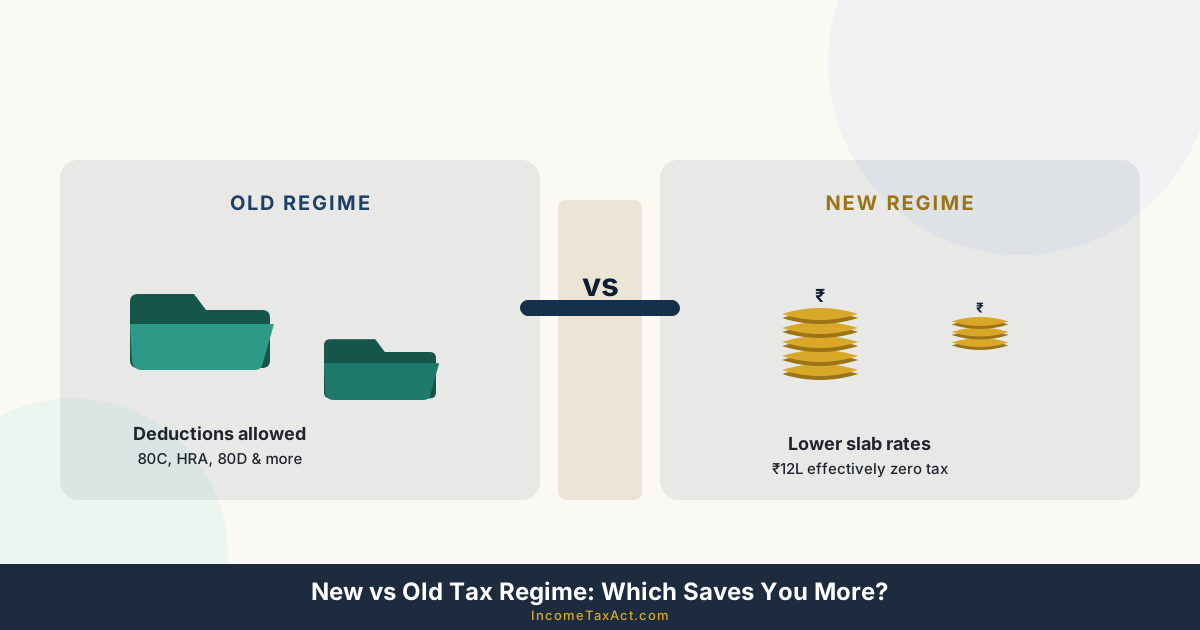
Result: In this example, the new regime saves Deepa ₹22,984 — even with substantial deductions in the old regime. This is because her deductions are moderate relative to her income.
Calculate your exact salary tax under both regimes using our free tax calculator. Enter your basic salary, HRA, investments, and get a side-by-side comparison instantly.
Organise your salary and tax documents
PayStub / Salary Slip Organizer Binder
Keep all 12 months of salary slips, Form 16, and employment letters in one binder — ready at tax time.
View on Amazon →Financial Planning Notebook — Income Tracker
Track monthly salary credits, TDS deductions, and investment contributions in a structured format.
View on Amazon →Accordion File Folder with Labels
Separate pockets for salary slips, HRA receipts, health insurance certificates, and Form 16.
View on Amazon →ℹ Disclosure: IncomeTaxAct.com is a participant in the Amazon Services LLC Associates Program. We earn a commission at no extra cost to you when you purchase through our links. Read our full affiliate disclosure.
HRA exemption is the least of: (1) actual HRA received, (2) 50% of basic salary for metro cities (40% for non-metro), and (3) actual rent paid minus 10% of basic salary. This applies under the old tax regime only — HRA is not exempt under the new tax regime.
Yes. The standard deduction of ₹75,000 is available to salaried employees and pensioners under both the new and old tax regimes for FY 2025-26. This is one of the key deductions retained in the new regime. It applies under Section 16, which has the same number in both the 1961 and 2025 Acts.
Related Guides