Income Tax Act 2025 vs 1961: What Actually Changed
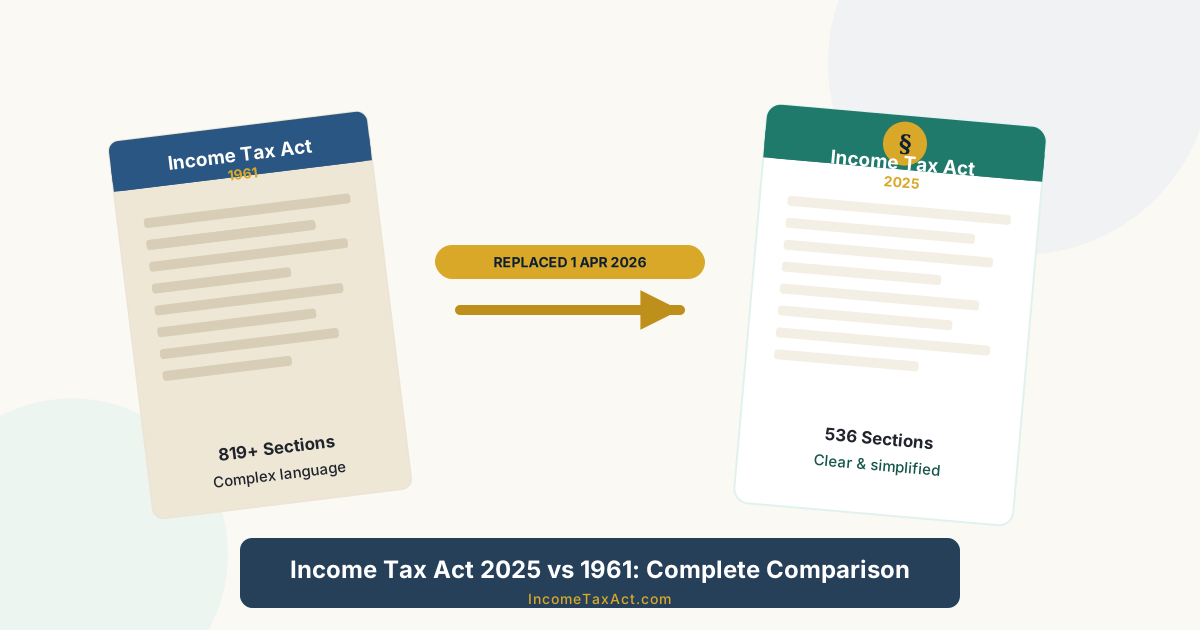
On 1 April 2026, India replaced a 65-year-old tax law with the Income Tax Act, 2025. This guide explains every significant change — and, just as importantly, everything that did not change — so you can confidently navigate the transition.
Why was the 1961 Act replaced?
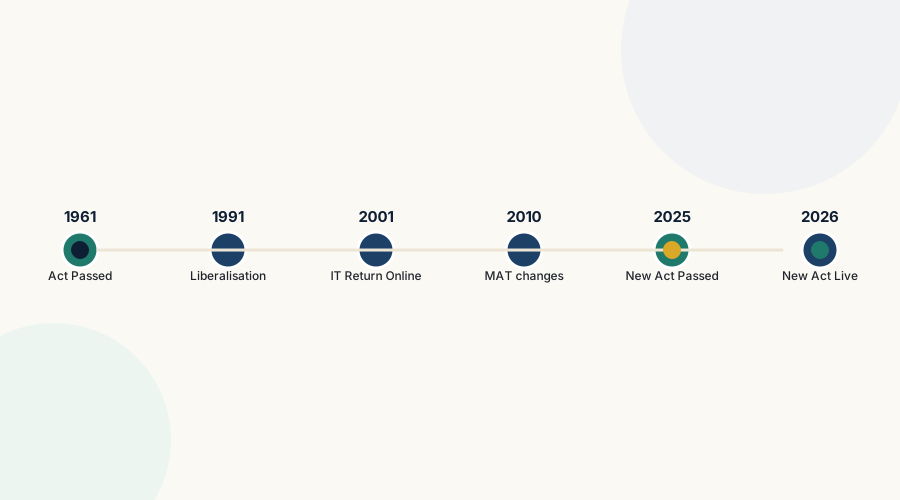
The Income Tax Act, 1961 governed Indian direct taxation from the day it came into force in April 1962 until March 31, 2026. Over 64 years it was amended by every Finance Act, subjected to more than 4,000 individual changes, and expanded from a relatively compact statute to one with over 819 sections — many bearing alphabetic suffixes like 80CCC, 80CCCD(1B), and 234F that reflected emergency insertions rather than logical structure.
The result was a law that was accurate but nearly impossible to navigate without specialist help. The Indian government formed a task force in 2017, which submitted its report in 2019 recommending a complete restructuring. The Income Tax Bill, 2025 was introduced in Lok Sabha on 13 February 2025, passed by both houses, and received Presidential assent on 21 August 2025.
What actually changed
Section numbers
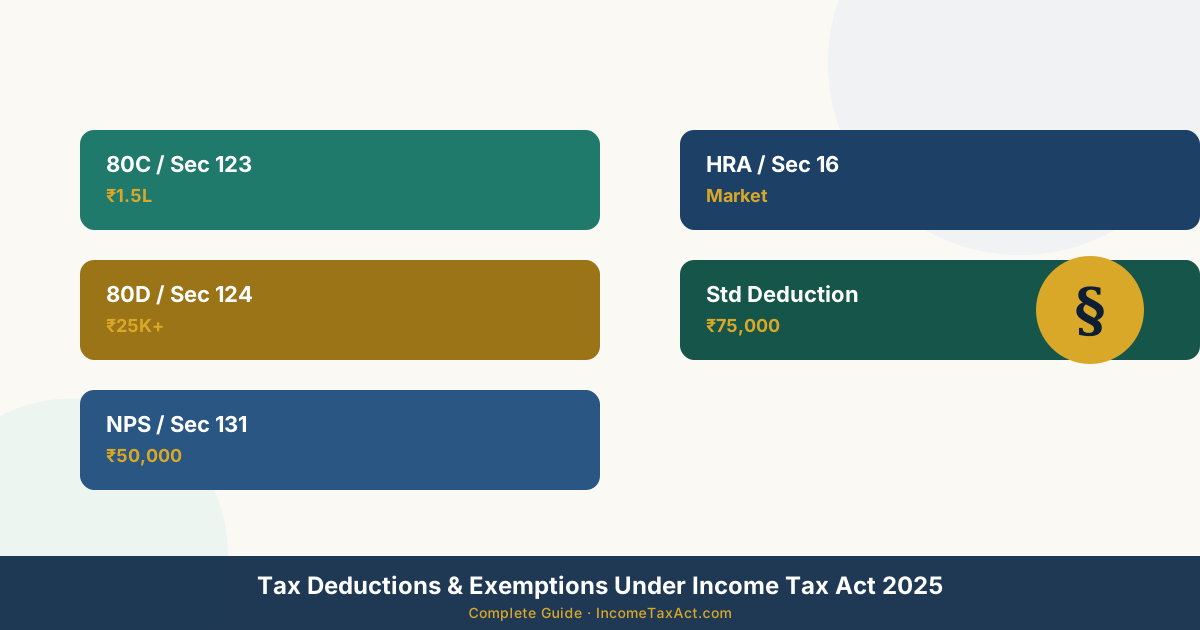
This is the biggest practical change for most taxpayers and tax professionals. Every section of the old Act has been renumbered. The new Act uses sequential numbering without alphabetic suffixes — so instead of Section 80CCD(1B), you now have Section 131(1B). The table below maps the most commonly referenced sections:
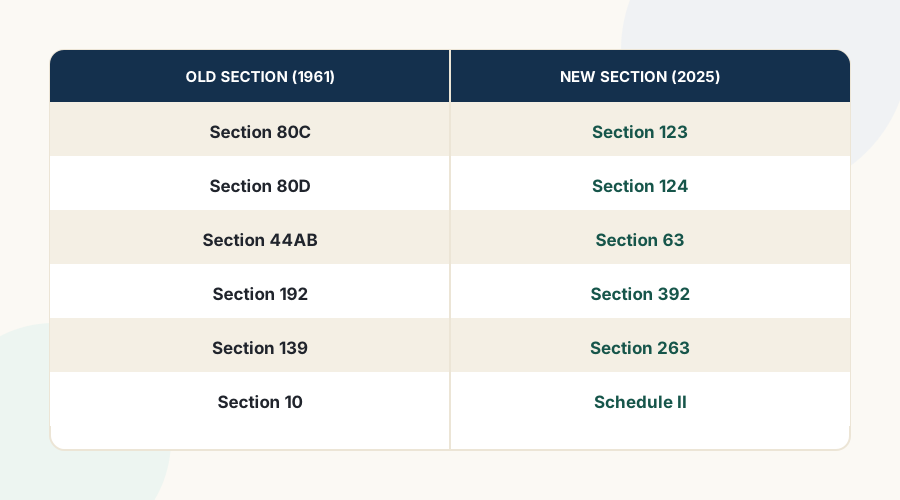
| Old Section (1961 Act) | New Section (2025 Act) | Subject |
|---|---|---|
| Section 80C | Section 123 | Investment deductions (ELSS, PPF, LIC, etc.) |
| Section 80D | Section 124 | Medical insurance premium deduction |
| Section 80CCD(1B) | Section 131(1B) | Additional NPS deduction ₹50,000 |
| Section 44AB | Section 63 | Tax audit threshold |
| Section 44AD | Section 66 | Presumptive income for business |
| Section 44ADA | Section 67 | Presumptive income for professionals |
| Section 87A | Section 87A (retained) | Tax rebate (₹12L zero tax) |
| Section 192 | Section 392 | TDS on salary |
| Section 194A | Section 393 | TDS on interest |
| Section 139 | Section 263 | Filing of return of income |
| Section 10 | Schedule II | Exempt incomes |
| Section 24(b) | Section 74 | Home loan interest deduction |
| Section 16 | Section 16 | Salary deductions (number unchanged) |
If you are filing your ITR in July or August 2026 for FY 2025-26 (income earned April 2025 – March 2026), you must use the old 1961 Act section numbers. The new sections apply only for Tax Year 2026-27 onwards. Your Form 16, TDS certificates, and the pre-filled ITR portal will still reference old section numbers for this filing cycle.
New terminology
The 2025 Act replaces some long-standing terms to reduce confusion:
| Old Term | New Term | Explanation |
|---|---|---|
| Previous Year (PY) | Tax Year | The year in which income is earned. Replaces the confusing "previous year" terminology. |
| Assessment Year (AY) | Assessment Year (retained for transitional use) | The year in which the return is filed and assessed. Gradually being phased out. |
| Section 10 exemptions | Schedule II | All exempt incomes now listed in a dedicated schedule rather than buried in sub-clauses. |
Extended time for updated returns
One substantive change for taxpayers: the window for filing an updated return (ITR-U) has been extended from 24 months to 48 months from the end of the relevant tax year. However, the additional tax surcharge increases the longer you wait — from 25% to 60% of the additional tax payable — so it is still cheaper to file correctly the first time.
What did NOT change
This is equally important. The following aspects remain identical under the 2025 Act:
- Tax rates and slabs — same as introduced in Budget 2025
- New tax regime as the default — you must actively opt for the old regime
- ₹12 lakh zero-tax under new regime — Section 87A rebate unchanged
- ₹75,000 standard deduction — for salaried and pensioners under new regime
- Section 80C (now Sec 123) deduction limit — still ₹1.5 lakh
- Section 80D (now Sec 124) health insurance deduction — unchanged limits
- Five heads of income — Salary, House Property, Business/Profession, Capital Gains, Other Sources
- TDS rates — renumbered but not changed
- Capital gains rates — LTCG at 12.5% and STCG at 20% on equity remain
The Income Tax Act, 2025 is a structural overhaul, not a policy change. Think of it as the government taking the same tax law, reorganising and clarifying it, and republishing it. Your tax bill does not change because of the 2025 Act alone.
Digital administration focus
The 2025 Act explicitly modernises the compliance infrastructure. Key changes include a requirement that businesses maintaining electronic books of account must ensure they are accessible from India at all times and that backup servers are physically located in India. This codifies what was previously governed by rules and circulars.
What you should do now
For most taxpayers, the action required is minimal but includes:
- File FY 2025-26 ITR normally using old 1961 Act sections — due 31 July 2026 (non-audit) or 31 August 2026 (self-employed non-audit under new Act).
- Learn the new section numbers if you are a CA, tax professional, or actively managing your own taxes. Our Deductions & Exemptions guide maps all major sections.
- Update your accounting software — most major platforms (Tally, ClearBooks, Zoho Books) have already pushed updates for 2025 Act compliance. Verify your version is current.
- Check updated return window — if you missed reporting income in a past year, you now have up to 4 years to file an ITR-U (though penalties apply).
Organise your tax documents
Tax Receipt File Organizer
Accordion file with labeled pockets — keep salary slips, Form 16, investment proofs organised for your ITR filing.
View on Amazon →Fireproof Document Box
Protect your PAN card, Form 16, property documents, and investment certificates from damage.
View on Amazon →Financial Planning Notebook
Dedicated tax and financial planning journal to track deductions, advance tax payments, and deadlines.
View on Amazon →ℹ Disclosure: IncomeTaxAct.com is a participant in the Amazon Services LLC Associates Program. We earn a commission at no extra cost to you when you purchase through our links. Read our full affiliate disclosure.
It is primarily a restructuring, not a new tax law. The tax rates, deduction limits, and core principles remain the same as under the 1961 Act. The changes are structural — new section numbers, cleaner language, removal of obsolete provisions, and modernised digital compliance requirements.
The Income Tax Act, 2025 came into force on 1 April 2026. However, your ITR for FY 2025-26 (income from April 2025 to March 2026) is still filed under the old Income Tax Act, 1961. The new Act applies from Tax Year 2026-27 (April 2026 to March 2027) onwards.
Section 80C of the old Income Tax Act, 1961 is now Section 123 in the Income Tax Act, 2025. The deduction limit of ₹1.5 lakh remains unchanged. However, this new section number only applies from Tax Year 2026-27 onwards.
No. The ₹12 lakh zero tax threshold under the new tax regime (achieved through the Section 87A rebate) remains unchanged in the Income Tax Act, 2025. For salaried individuals, the effective zero-tax income is ₹12.75 lakh after the ₹75,000 standard deduction.
Related Guides